
Walk a Fairfield Street to an Address Clue
A Fairfield street directory search should move from a physical address to a parcel, then from the parcel to records with a date and purpose. The APN is the bridge. It can connect the assessor roll to GIS and help test whether a recorded deed describes the same land. A deed names parties to an instrument, not everyone who lived in the house. A directory or census entry supplies a dated household clue, not a continuous occupancy record.
Use the chain in order so every step leaves a checkable note.
- Enter the address in the Solano Assessor Property Search. Save the APN, situs address, mailing destination, legal description, and any public owner field.
- Open Solano GIS, locate the parcel, and click nearby polygons. Note corner lots, parcels fronting another road, jurisdiction, and relevant district layers.
- Use the APN or legal description to identify the matching recorded deed. Treat the grantor and grantee as transaction parties, not automatic occupants.
- Add Fairfield Building Safety permits, planning files, or code records by address. A permit dates work and names an applicant or contractor; it does not date a move.
- For earlier households, compare reverse directories, census schedules, newspapers, obituaries, and the library’s local-history material for the same address or block.
The resulting Fairfield street directory trail can show what the public record establishes and where it stops. That distinction matters most when a mailing address, parcel owner, and household name do not match.
Turn a Fairfield Street Address Into an APN
The Solano County Assessor Property Search uses one combined APN or Street Address field. One term is required. County guidance says less information can return more, so omit a street suffix such as LN, ST, or AVE and directions such as N, S, E, or W when a full string misses. The public page does not advertise an owner-name search, although county staff can help locate an APN from an address or owner by telephone.
| Field or control | What the Fairfield street directory search gets |
|---|---|
| APN or Street Address | Parcel number or physical address clue used to begin the lookup. |
| Search | Property result and mapped navigation. |
| Advanced tips | Broader address matching when punctuation, suffixes, or direction letters interfere. |
| Public record fields | APN, situs, owner where displayed, mailing address, values, use, characteristics, and legal description. |
The situs is the parcel’s physical location. The tax mailing address is where the bill is sent and may be a PO box, trustee, manager, or other destination. Neither proves who occupies the parcel. Preserve both before moving to deeds or directories.
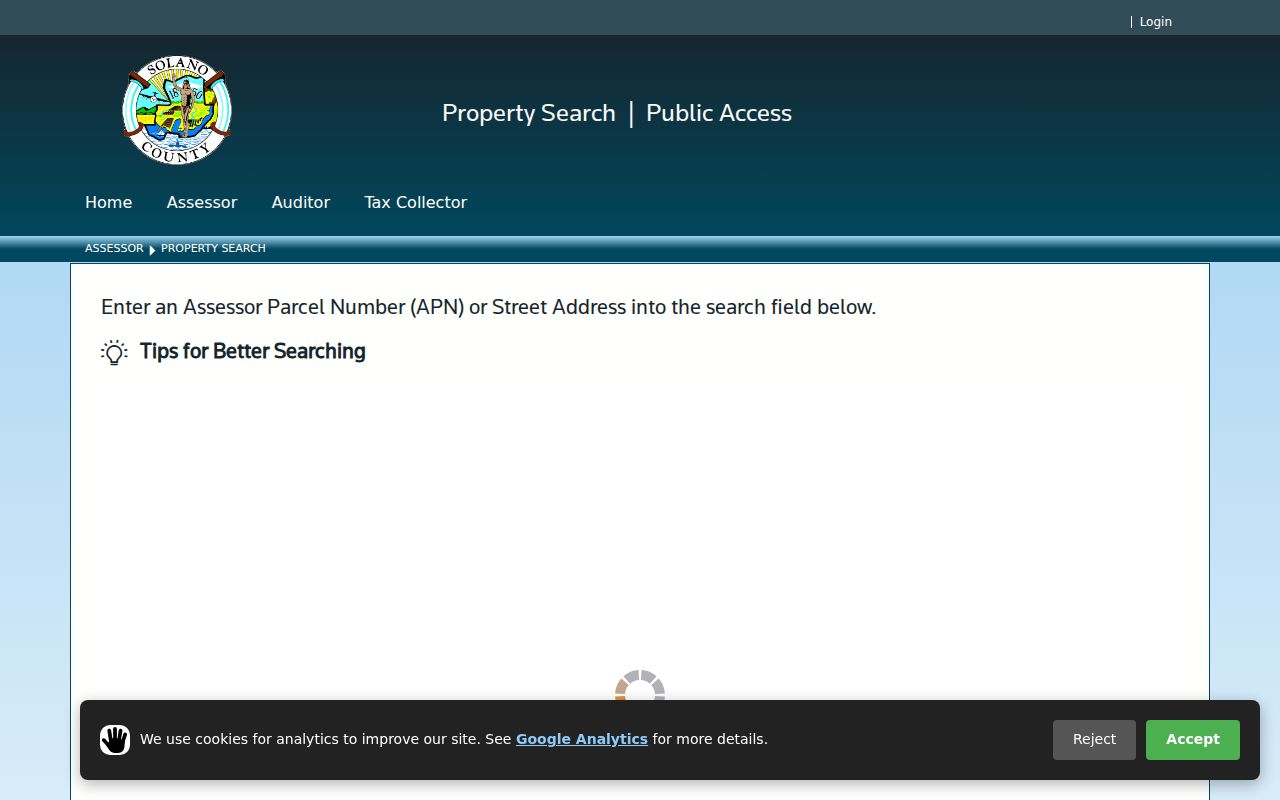
The assessor image shows why an address search is different from a public owner-name browse. A successful result becomes a parcel clue that can be tested in GIS and the recorder index.
Browse Fairfield Street Parcels in Solano Maps
Solano County GIS and Interactive Maps adds the street view that a name index cannot. Search or zoom to the address, click the parcel, record its APN, and then click adjacent polygons one at a time. Walk both sides of a road. Corner lots may front another street, and more than one address can sit on a single parcel. Parcel lines are a research aid, not a legal survey.
The documented map mechanics include APN search with fuzzy tolerance, partial book and page searches, a parcel pop-up, arrows for multiple addresses on one parcel, and a Find By Value street-name mode. The map can also expose layers for roads, jurisdiction, zoning, flood areas, school or fire districts, and political boundaries when the viewer makes them available. Record the layer name and date because map behavior can change.
- Parcel
- A mapped unit of land identified by an APN, sometimes containing more than one address.
- Plat
- A recorded map that lays out lots, blocks, streets, or easements in a subdivision.
- Criss-cross directory
- A reverse directory organized by address or telephone rather than only by surname.
Solano County’s Accela property lookup is mainly for county or unincorporated permitting. Its tabs include Address, Parcel Information, Property Owner, and Record Information. Incorporated Fairfield routes permit work to Fairfield BUILD, while a rural parcel with a Fairfield mailing label may route to a county department.
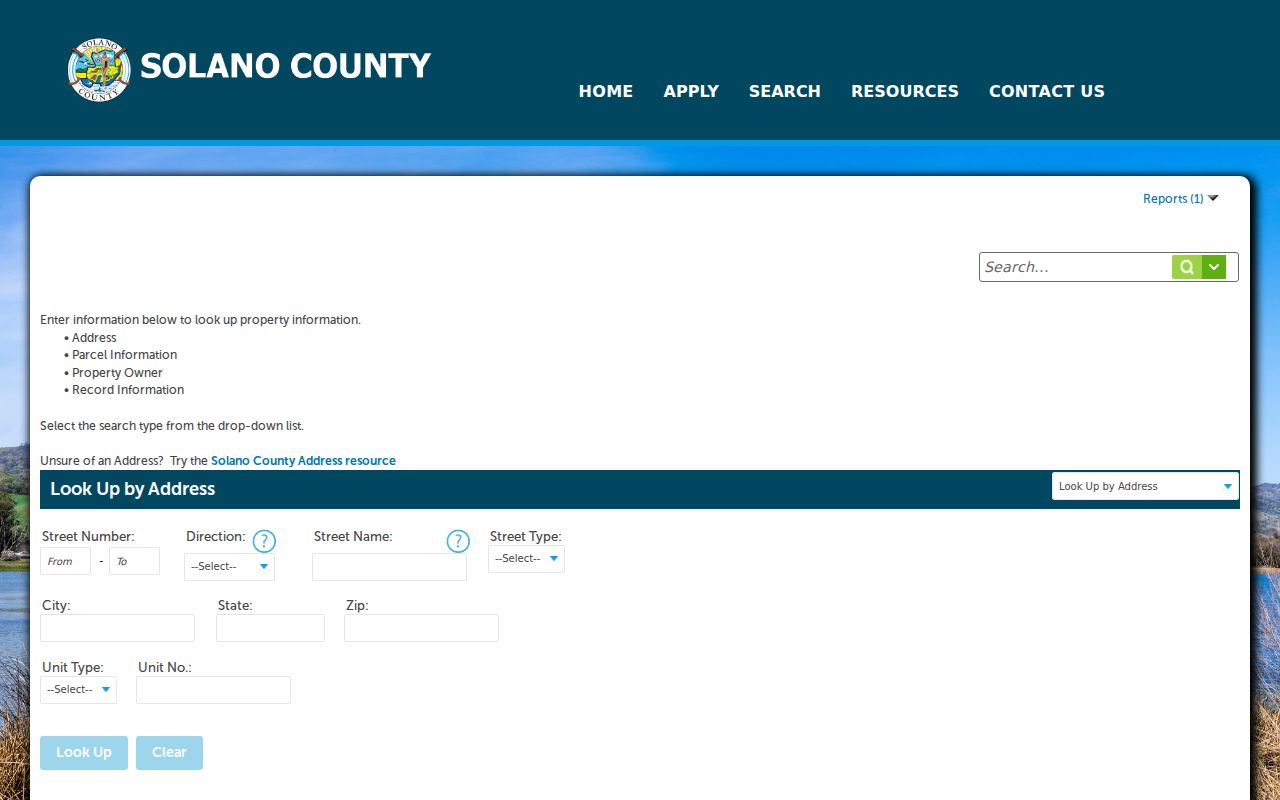
Use GIS for the parcel context, then use the agency record that matches the jurisdiction. That extra boundary check prevents a county permit result from being described as a city record.
Fairfield Records Searchable by Street
Address-keyed record sets make up the working Fairfield street directory, but their rows answer different questions. The APN ties the parcel map to the assessor. The legal description ties a deed to the land even when a street label changes. A permit dates a project and names participants. A historical directory or census schedule supplies a dated household. The voter file is not a public street list and cannot fill the gaps by casual browsing.
| Record set | Keeper | What it shows | Access |
|---|---|---|---|
| Assessment roll | Solano Assessor | APN, situs, owner where public, mailing destination, value and use | Address/APN portal; suppressions possible |
| Parcel GIS | Solano GIS | Shapes, APNs, roads, districts, jurisdiction and map layers | Free viewer; click and compare |
| Recorded documents | Solano Recorder | Grantor, grantee, liens, transfers, dates and legal descriptions | Free index; counter images and paid copies |
| Permits and planning | Fairfield or Solano departments | Work, applicant, contractor, project dates and status | BUILD, county lookup, counter, or request |
| Reverse directory and census | Library, archives, NARA | Dated address or household evidence | Collection or database access; coverage varies |
When the rows disagree, do not average them. The mailing address may identify a tax recipient while the situs identifies a parcel. A deed may name a trust, estate, or former owner. A directory may omit an unlisted household. Record the date and the exact field that supports each statement.
Follow Fairfield Street Records Through Deeds
The Solano Recorder’s free web index is name and document driven. Its simple search accepts free text, and official instructions prefer DOE JOHN over DOE, JOHN; advanced searching can use grantor or grantee, recording-date range, document number, and document description. Results show document number, recording date, page count, title or description, and party names. The online index does not provide a searchable street address or image.
A grantor gives or encumbers an interest. A grantee receives it. To work backward, begin with a public current owner and APN, find the acquisition deed, record the grantor, then search that grantor as an earlier grantee. Match the legal description, subdivision, lot, block, or APN before treating the record as the same parcel. A deed of trust is security, not a sale; a reconveyance releases it; a quitclaim can change vesting; a probate distribution or trustee’s deed may mark a different transition.
Images reach 1955 forward on office computers, while microfilm reaches 1848. The recorder counter and mail request remain important when the web index ends. A copy request should give party names, document number or book and page, date, telephone, fee, and the requested copy or certification. Current research information lists $9 for the first page, $1 for each added page, and $6 for certification, subject to the office’s schedule.
Fairfield Street Permits Date Work, Not Occupancy
Fairfield Building Safety adds an address timeline. Fairfield BUILD launched April 22, 2025 and replaced TRAKiT. The city says active and historical permit, plan, and project data transferred, but older material that does not appear online still requires the Building Safety archive. A permit can show a record number, site address, project, applicant, contractor, dates, status, inspection events, or valuation where the public file exposes them.
A finaled new-building permit can bracket when a structure became usable. A reroof, addition, demolition, electrical, plumbing, or HVAC record shows a physical change. None gives a move-in or move-out date. The named owner may be accurate only for that transaction. Applicants, designers, contractors, and owners are participants in a project and should not be relabeled as the entire household.
City records requests should identify a department, date range, address, permit or case number, subject, and desired format. Older plans may need a counter request or staff retrieval. If the parcel lies outside incorporated Fairfield, check Solano County routing before sending the request.
Check Which Fairfield Street Desk Owns the Address
Fairfield mailing geography can cross the city line. Cordelia, Green Valley, Suisun-adjacent streets, Travis AFB, and rural parcels may use a Fairfield postal label while routing a permit or planning file elsewhere. A street directory search should test the address in Solano GIS before assuming Fairfield Building Safety is the custodian.
For an incorporated parcel, Fairfield BUILD handles the city permit route. For county or unincorporated land, Solano’s Accela property lookup and Resource Management channels may be the better start. The same address can produce different results in the city and county systems because the jurisdictions keep different records. Retain the city-line result, APN, and permit number in the request.
This check also protects historical work. A Green Valley or Suisun label in a directory does not, by itself, move the parcel or change the owner chain.
Old Fairfield Streets Need Time Markers
Address continuity is not automatic. Solano records may use a legal description while a modern directory uses a street number. Fairfield’s 1942 air base growth and 1966 Travis annexation changed the region’s address and jurisdiction context. A family can appear under Fairfield, Suisun City, a base label, Cordelia, or Green Valley in different years. Search the paired place names, then bring the result back to the APN, map, or deed.
For historical households, the Fairfield street directory trail is strongest when a reverse directory is paired with the federal census, newspaper, obituary, permit, or deed record. The 1950 census is the newest public population schedule in 2026 under the National Archives’ 72-year release rule. A gap between published directory issues does not prove a move. It may reflect a missing volume, an unlisted telephone, or a change in the source’s coverage.
The full historical collection work belongs on the Fairfield city directory page. Street research should borrow only the entry needed to explain a block or address, then return to the modern parcel chain.
Fairfield Voter Data Cannot Build a Street List
California My Voter Status is an authenticated self-lookup. It can show a voter’s own registration status, party preference, polling place, election information, and ballot status. It does not let a Fairfield residents directory query a street or block. A full voter file is released only for approved election, scholarly, journalistic, political, or governmental purposes under Elections Code §2194 and related regulations.
Home street address, telephone, email, signature, registration identifiers, driver license or ID information, Social Security data, and protected-voter categories receive special treatment. Elections Code §18109 makes unauthorized voter-file use a misdemeanor. The Solano Registrar of Voters can describe the current application and permitted geography for a lawful request, but a personal curiosity search is not a qualifying reason.
That boundary protects the difference between a registered voter and every person at an address. It also keeps a street directory honest about children, unregistered adults, renters, protected participants, and people who are absent from the roll.
Where the Fairfield Street Directory Stops
Public address records do not list every person who shares a home. Assessor and deed records center on ownership or a tax recipient. Permits center on a project. A reverse directory may omit an unlisted telephone or cover only one publication year. DMV data is restricted under the federal Driver’s Privacy Protection Act, and utility customer information is not a public Fairfield roll. Protected voters and Safe at Home participants may be deliberately absent from ordinary address clues.
Official rolls and commercial neighbor tools also differ. Official records have a named custodian, a defined purpose, and a correction route. Commercial tools may merge names, charge recurring fees, lag corrections, and combine data from sources with different dates. Neither category turns a parcel owner into proof of occupancy. For a lawful family-history, property, civic, or safety question, prefer the record that directly supports the fact and stop when the next step would expose protected information.
Lawful use. Fairfield street and address records are for personal, lawful research. California stalking, criminal-threat, identity-theft, harassment, and voter-file misuse laws apply, and no record should be used to stalk, harass, intimidate, or harm anyone.