
What a Fairfield Resident Lookup Can Confirm
A Fairfield resident lookup is strongest when each record is asked only the question it was designed to answer. The Solano Assessor can show a parcel, public owner field, situs, and tax mailing destination. A deed links named parties to a legal description. A court portal shows public case data. A vital certificate may confirm an event if the requester is eligible. A license or business filing shows an affiliation. None alone proves that someone currently lives at an address.
| Record | What it confirms | Where | Access |
|---|---|---|---|
| Assessment roll | Parcel, ownership where public, situs, mailing destination | Solano Assessor | Free APN/address search; privacy suppressions possible |
| Recorded deed | Party names, date, instrument, legal parcel link | Solano Recorder | Free metadata; copies and images through office channels |
| Superior Court case | Party role, case type, filing activity, status, public disposition | Solano Public Portal | Free account; confidential matters excluded |
| Vital record | Birth, death, public marriage, or divorce event details | Recorder, CDPH, or court | Informational or authorized access rules apply |
| License or business filing | Credential, entity, agent, discipline, or address of record | DCA, SOS, county, or city | Free index; affiliation is not residence proof |
| Probate or historical source | Decedent, petitioner, heir clue, dated household or prior place | Solano Court, library, archives | Public portions only; collection rules vary |
Start with the most concrete clue. Use an APN when an address is known, a case number when a court matter is known, and a full name with date or place when only a person is known. A resident lookup should end with a custodian correction or a clear “not established,” not an unsupported certainty.
Search Fairfield Court Records by Name and Date
The Solano Superior Court Public Portal requires a free account. Registration asks for an email login, password, name, telephone, and agreement to the portal terms. The search accepts a case number, last name, first name, company name, and filed-from or filed-to dates. Last, first, and company names need at least two characters. A date range is often the difference between a useful result and a same-name pile.
| Portal result field | Why it matters |
|---|---|
| Case number | Stable key for branch questions and copy requests. |
| Party name and role | Shows whether the person is a plaintiff, defendant, petitioner, respondent, or another party. |
| Case type and branch | Separates civil, criminal, family, probate, traffic, and other records. |
| Filing date and status | Anchors the event in time and shows whether a matter remains active or has a public disposition. |
| Register of actions | Lists public event dates and descriptions; images are not uniform online. |
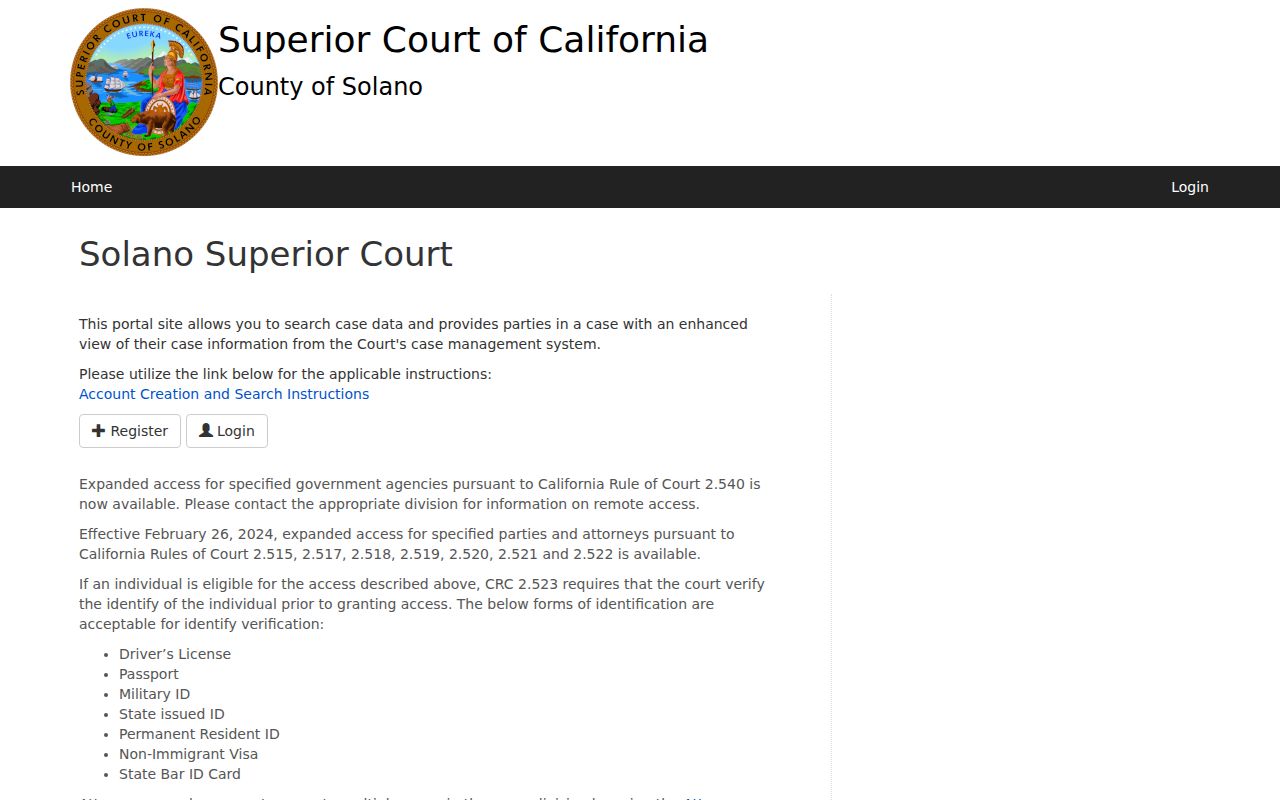
Fairfield divisions occupy the Old Solano Courthouse, Hall of Justice, and Law and Justice Center. If a result matters, use its case number and branch to reach the clerk. The portal entry is not the official court record unless electronically certified under Rule 2.504(b).
Beat the Fairfield Resident Lookup Same-Name Trap
One name is a weak identifier in a county with Fairfield, Suisun, Vacaville, Dixon, and Rio Vista records. Test middle initials, former surnames, hyphenation, accents, apostrophes, reversed name order, trust names, and business names. Narrow the period and place before adding another database. An identical name in a court result does not establish that the party owns a parcel or belongs to a particular family.
A two-record match is more useful when the records share a legal parcel, middle name, spouse or relative, occupation, case date, or entity connection. A deed image and assessor APN can anchor property identity. A court case and a separate probate, business, license, or obituary record can support a historical identity. Note conflicts rather than smoothing them away.
For a name-only lookup, write a comparison line for exact name, variants, date window, Fairfield or Suisun geography, party role, APN, associated entity, occupation, and source date. Reject a match when chronology or geography fails. A careful “not enough evidence” is a valid resident lookup result.
Verify One Fairfield Resident Carefully
A sound resident lookup anchors a name to a dated fact before searching for a second record. An address may lead to the assessor and deed chain. A public case may lead to the court register. A historical name may lead to a library obituary, yearbook, or directory. The goal is not to gather the most hits. It is to find two independent records that support the same person without crossing an access boundary.
- Write the full name and all reasonable variants, then add Fairfield, Suisun, Solano County, and a time window.
- Anchor the person with a public parcel, case, business, license, probate, or dated historical record.
- Search the second custodian using the matching name, role, date, APN, spouse, occupation, or entity.
- Inspect the source record or request a certified copy when a formal proof is required. Do not treat an index screen as the document.
- Docket
- The court’s running record of case events, filings, hearings, and orders.
- Index versus image
- An index gives searchable metadata. An image or file contains the underlying document and may require an office visit, copy fee, or eligibility.
- Certified copy
- A custodian-attested copy intended to carry official certification, often with a separate eligibility and fee rule.
California’s vital-record system makes this distinction important. An informational certified copy may be broadly available but is marked not valid to establish identity. Authorized certified copies require a category listed in Health and Safety Code §§103526 and 103526.5. Confidential marriage records are limited under Family Code §509, and adoption records and original birth certificates are generally sealed under §102705.
Separate Fairfield Vital Records From Certificates
Solano County’s Assessor/Recorder issues certified birth, death, and public-marriage records for Solano events. The California Department of Public Health supplies statewide ordering routes. The county accepts in-person, online, and mail requests through Vital Records at 675 Texas Street, Suite 2700. A request identifies the event, date and place, registrant or decedent, relationship or eligibility category, applicant contact information, copy count, signature, and sworn statement where required.
The county research lists 2026 state fees of $31 for birth, $26 for death, and $19 for public marriage, with the current checkout controlling. Informational and authorized copies are not interchangeable. Divorce information also splits: the Superior Court holds the actual decree and file, while a CDPH certificate of record, where available, gives limited event details rather than decree terms.
Use a historical index, newspaper, cemetery record, or obituary as a clue. Use the custodian’s application and eligibility rules for a certificate. A resident lookup should never imply that an open historical index makes a modern certificate unrestricted.
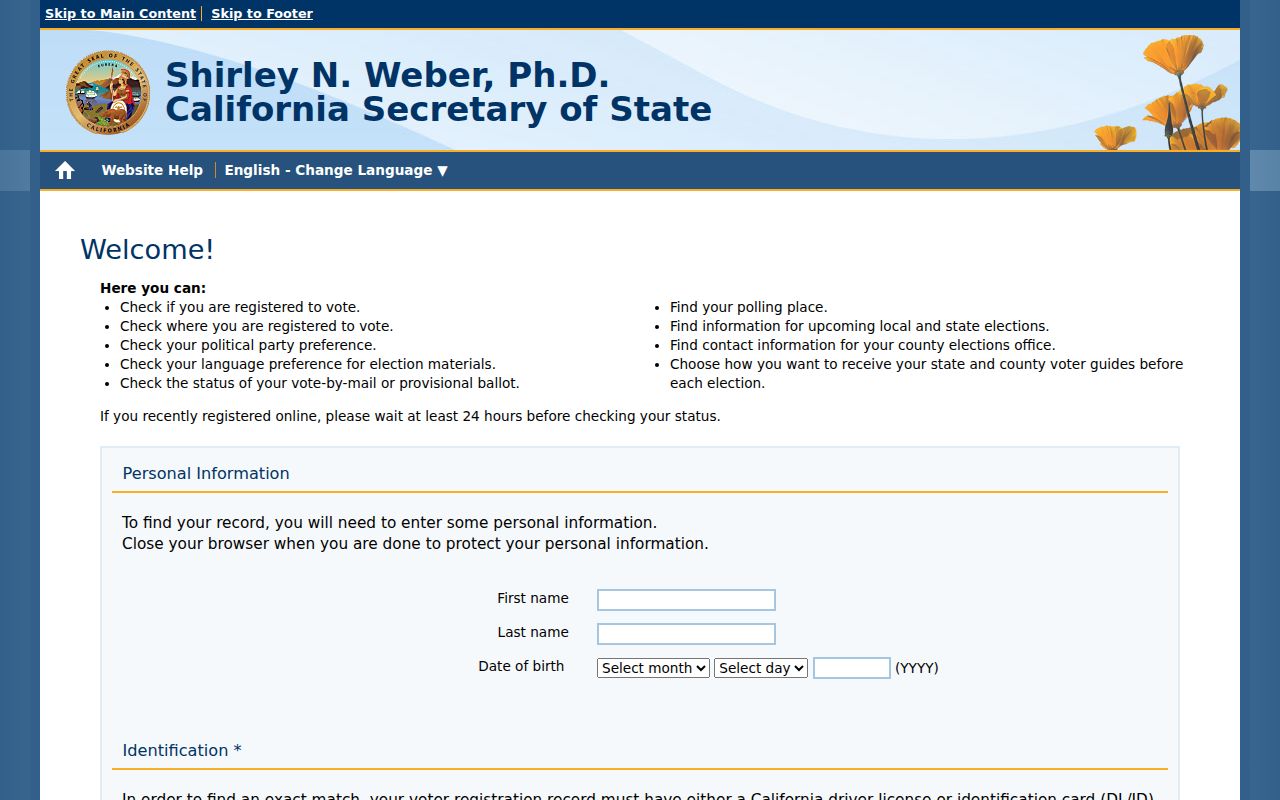
The California My Voter Status screen shows the separate identity gate used for a voter’s own record.
Use Fairfield Resident Licenses as Affiliations
California license and business systems can confirm a professional or entity connection without proving a home. The Department of Consumer Affairs License Search can use board, license type, license number, business name, first name, last name, registry number, and advanced search fields. DCA notes that some boards, including CSLB and other independent programs, need their own portals.
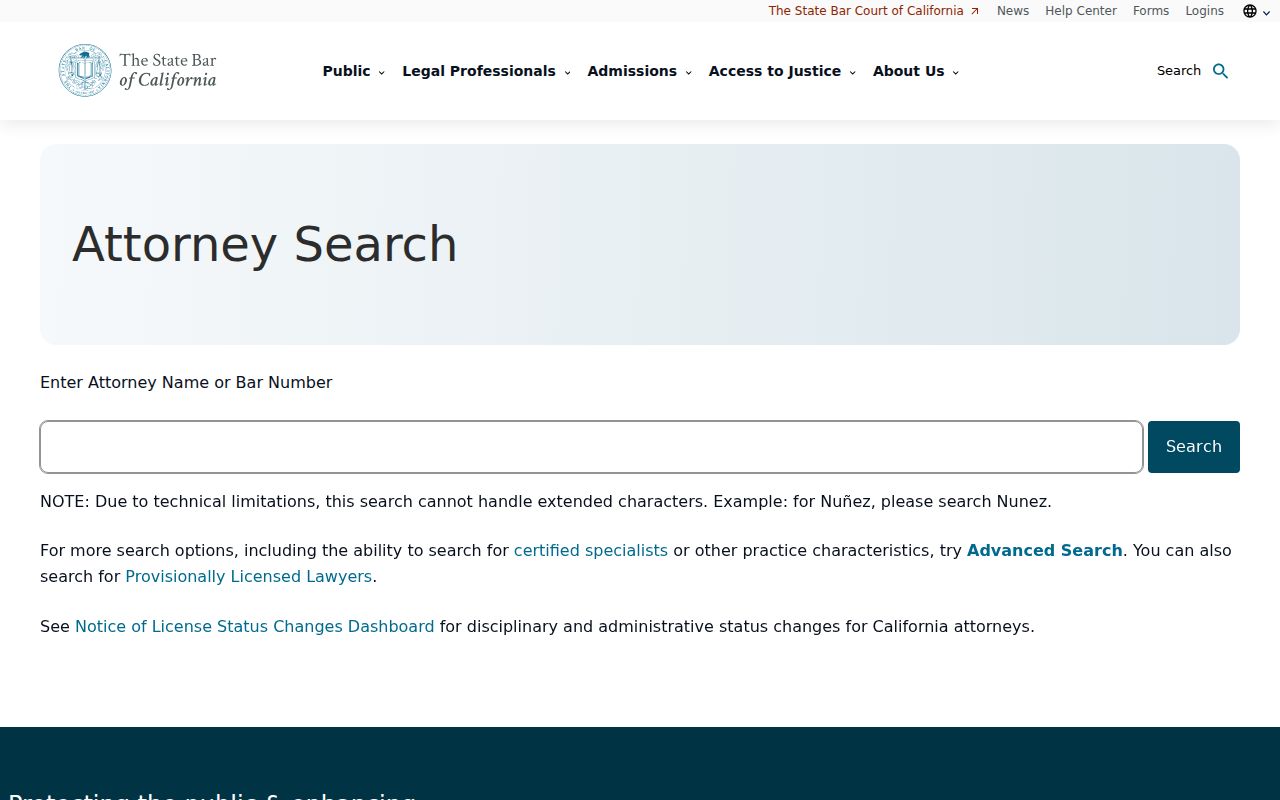
The California State Bar search is one example. Results can show status, admissions, public discipline, and contact information governed by the board. The Secretary of State’s bizfile identifies entities, agents, addresses, and filings. Solano FBN records and Fairfield business-license material add county and city layers. Read every address as an office, agent, service, or business address unless the source says more.
A good lookup records license number, status date, board, entity number, and source URL. That prevents an old affiliation from being presented as a current home clue.
Find a Fairfield Resident Heir Through Public Probate
Probate is a focused human-use path for a Fairfield resident lookup. A public petition, notice, order, or recorded distribution deed may name a decedent, petitioner, heir, devisee, or parcel. Begin with the Solano probate case, note the case number and filing date, then match any distribution deed to the APN and legal description. Addresses can be redacted or stale, and restricted documents remain unavailable.
For a birth-parent search, use California’s official adoption-information, reunion, and court processes. Do not try to use a voter file, confidential marriage record, or sealed birth record as a shortcut. For a former classmate, a yearbook, obituary, newspaper, alumni item, or public professional record is a more appropriate historical trail. Each use case needs its own lawful source.
When a result is wrong, send the correction to its custodian: assessor ownership or characteristics to the Assessor, deed indexing to the Recorder, docket data to the court clerk, license data to the board, and voter information to the Registrar of Voters. A third-party compilation cannot amend a source record.
Request the Missing Fairfield Resident Record
The California Public Records Act, Government Code §§7920.000–7931.000, lets any person request an identifiable existing record from a covered agency, subject to exemptions. Describe the department, address, date range, case or permit number, person or subject, and desired electronic format. Agencies generally make an initial determination within 10 calendar days, with a written extension of up to 14 days for unusual circumstances. Inspection is generally free; direct duplication costs may apply.
The CPRA does not require an agency to create a new record or answer a question as an investigation. A city permit request, a recorder copy request, a court Form 4021 search, and a vital-record application are different channels. If the online portal ends, use the counter, telephone, mail request, library, archive, or clerk procedure documented for that record.
Keep the request narrow enough to retrieve. A well-labeled existing record is more useful than a broad demand for “everyone” at a Fairfield address.
Know the Limits of a Fairfield Lookup
California’s privacy model leaves important gaps by design. My Voter Status is self-only. Full voter files are purpose restricted under Elections Code §2194. Safe at Home provides a substitute mailing address and confidential voter registration for eligible survivors and threatened participants under Government Code §§6205–6216. Sealed adoption records, confidential marriages, protected court matters, and restricted vital certificates do not become open because a name is known.
California’s CCPA and CPRA give qualifying residents rights against covered businesses, and DROP can send one deletion request to registered data brokers. Those tools do not erase Solano deeds, assessor data, court files, or other government records. Government Code §7924.000 protects specified voter fields, while the federal DPPA restricts motor-vehicle information.
Lawful use. A Fairfield resident lookup is for personal, lawful research, genealogy, reconnecting, and civic understanding. Stalking, harassment, intimidation, identity theft, threats, and voter-file misuse are not acceptable uses of a public record.
Stop when the next step would evade a confidentiality program or expose a person who is intentionally protected. A custodian can explain the allowed route, but cannot convert a restricted source into a private name search.